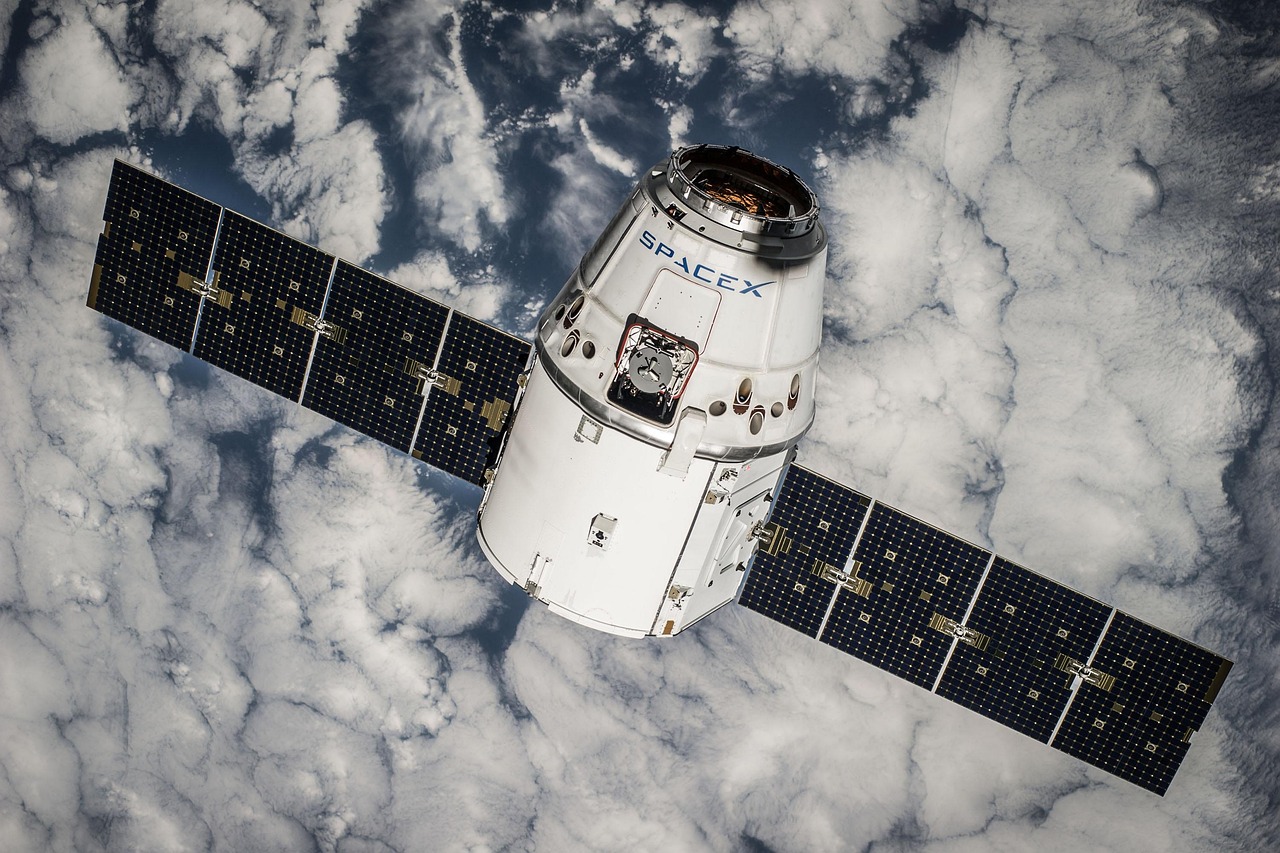

After 13 suborbital test flights spread across more than two years, SpaceX’s Starship finally did the one thing it was built to do: reach orbit. Flight 14 lifted off at 7:48 a.m. CT on September 28 from Starbase, Texas, carrying the first batch of operational Starlink V3 satellites — the most capable internet satellites ever deployed. This is the complete picture of what worked, what didn’t, and why this one flight changes the economics of satellite internet permanently.
Key Takeaways — What Actually Happened and What People Keep Asking
Flight 14 generated more search volume in the 24 hours after launch than any previous Starship mission. These are the answers to the questions that surfaced most — the ones the press release doesn’t fully address.
Yes — and it is not close. By every primary objective SpaceX defined for the mission, Flight 14 succeeded. The vehicle reached orbit for the first time in Starship’s history. All 26 Starlink V3 satellites were deployed and confirmed operational by the Starlink ground team. The ship completed a controlled reentry and splashdown in the Pacific Ocean. SpaceX declared the flight a mission success on X, with Elon Musk confirming all 26 satellites were operating nominally shortly after deployment. Two engine anomalies occurred (one on the booster, one on the ship) but neither prevented the mission from completing its primary objectives — a significant demonstration of system redundancy at scale.
Starlink V3 is the third generation of SpaceX’s internet satellites — and it is not an incremental upgrade. Each V3 satellite is designed to deliver 1 terabit per second (1 Tbps) of downlink capacity, roughly 10 times the capacity of a V2 Mini satellite currently launched by Falcon 9. The uplink capacity is 160 Gbps, approximately 22 times the V2 Mini. The satellites are also physically large — about the size of a Boeing 737 when fully unfurled — which is precisely why they require Starship rather than Falcon 9 to launch in meaningful numbers. The 26 satellites deployed on Flight 14 add an estimated 26 Tbps of capacity to the constellation — roughly 10 times what a full Falcon 9 Starlink mission adds. This is the capacity upgrade that makes Starlink’s direct-to-cell service at meaningful speeds genuinely viable.
The original Flight 14 profile called for approximately 6 orbits over roughly 10 hours, with splashdown targeted west of Chile in the Pacific. SpaceX announced a decision to shorten the mission to about 3 hours and deorbit after the satellite deployment was complete, splashing down north of Hawaii in the North Pacific Ocean instead. The stated reason was mission data review — the primary objectives (orbit, deployment) were complete, and SpaceX opted to bring the vehicle home safely rather than extend the mission after the early engine shutdowns. Crucially, the shortened mission did not prevent any primary objective from being met. Elon Musk subsequently stated that unless problems were discovered in the mission data review, SpaceX intends to attempt catching Ship with the tower on Flight 15.
Two engine anomalies occurred during Flight 14. One of the 33 Raptor engines on Super Heavy shut down at approximately T+1:16 during initial ascent — this is the booster’s first stage. The booster continued its ascent on the remaining 32 engines, completed hot-staging, executed its boostback burn, and splashed down in the Gulf of Mexico. A second anomaly: one of Ship 41’s Raptor vacuum engines shut down early during ascent. The ship continued on its remaining engines, completed the orbital insertion burn successfully with a single engine, and reached the planned ~275 km orbit. SpaceX’s mission profile notes that after the initial ascent burn, Starship operates on a passively safe trajectory — the multiple-engine redundancy is intentional design, not a workaround.
Not immediately for individual users — the 26 satellites need to complete on-orbit checkout before contributing to the constellation at full capacity. But the trajectory is significant: SpaceX says each Starship V3 launch adds approximately 20 times the network capacity of a Falcon 9 V2 launch. The June 2026 price increases ($5–$10/month for most plans) were partly justified by SpaceX citing rising demand — V3 deployment is the supply-side answer to that demand pressure. When enough V3 satellites are in service, the capacity per user on the network increases, which should improve performance during peak hours, particularly in dense suburban areas where Starlink has faced the most congestion. Direct-to-cell service through T-Mobile will also accelerate — the V3 architecture is specifically designed to support it at meaningful speeds.
September 28, 2026 marks exactly 18 years to the day after SpaceX’s Falcon 1 rocket became the first privately developed liquid-fueled rocket to reach orbit, on September 28, 2008. That Falcon 1 mission was SpaceX’s fourth attempt — the company nearly ran out of money waiting for it to succeed. The symmetry is not incidental; Elon Musk and SpaceX made the connection explicit on September 28. Falcon 1 proved a private company could reach orbit. Starship Flight 14, on the same calendar date 18 years later, proved that the largest rocket ever built by any company or government could do the same — while delivering operational payloads to orbit at the same time.
Tower catch — where mechanical arms on the launch tower grab the returning Super Heavy booster in midair — was deferred to Flight 15. The decision reflected SpaceX’s sequencing: prove orbital flight and payload delivery first, then layer in the most advanced recovery technique. The booster instead completed a controlled water landing in the Gulf of Mexico, testing its boostback and landing burn performance without the added complexity of a tower-catch maneuver. Elon Musk confirmed post-flight that SpaceX plans to attempt catching Ship 41’s successor with the tower on Flight 15, currently targeting no earlier than October 19. Flight 15 would use Booster 22 and Ship 42.
Three notable heat shield tests happened on Flight 14. First: first-ever reuse of Starship heat shield tiles — two tiles recovered from Ship 40 were installed on Ship 41 and flew through reentry. This marks the beginning of tile reuse, a production and turnaround milestone the program has needed since the heat shield is made up of approximately 18,000 hexagonal silica ceramic tiles. Second: three of the 26 Starlink V3 satellites carried external cameras specifically to photograph Ship 41’s heat shield from orbit before reentry — allowing engineers to identify any tile damage before the vehicle entered the atmosphere. Third: new curved tiles designed to reduce superheated plasma infiltration between tile gaps were tested in real reentry conditions for the first time. Post-flight analysis of all three will directly inform Ship 42’s heat shield configuration for Flight 15.
The FAA issued the launch license for Starship Flight 14 on September 26, two days before launch, after months of preparation. The original target of September 22 slipped due to the need for a license modification permitting Flight 14’s orbital profile and Pacific reentry — a more complex regulatory case than any previous Starship flight, which had all been suborbital. The FAA confirmed that SpaceX “met all safety, environmental, policy and financial responsibility requirements” for the mission. The regulatory timeline for Flight 14 was one of the most watched elements of the lead-up; SpaceX had been operationally ready before the license arrived, with the wet dress rehearsal completed on September 23 while the license was still pending.
Flight Timeline — What Happened and When on Sept. 28
All times UTC unless noted. Events confirmed from SpaceX broadcast and mission data. Ship 41 and Booster 21 (Block 3, designated Starlink Group 31-1).
Starlink V3 — What 26 Terabits of New Capacity Actually Means
The satellites deployed on Flight 14 are not incremental improvements to existing hardware. They represent an architectural step-change in satellite internet capacity — and Starship is the only rocket capable of deploying them at operational scale.
(1,024 Gbps — 10× V2 Mini)
(22× V2 Mini uplink)
(~10× a full Falcon 9 V2 mission)
~60 satellites per mission
(60 V3 sats = ~60 Tbps)
Each Starlink V3 satellite weighs approximately 2 metric tons when stowed and expands to roughly the wingspan of a Boeing 737 when its solar arrays are deployed. Falcon 9 — the rocket that built the original Starlink constellation — cannot carry satellites this size in useful numbers. A full Starship load is designed to carry up to 60 V3 satellites, compared to roughly 60 V2 Minis on a Falcon 9. But the capacity comparison is not 1:1 — 60 V3 satellites add approximately 60 Tbps of designed capacity, versus roughly 3 Tbps for a full V2 Falcon 9 load. That is a 20:1 advantage in capacity per launch.
This is the economic argument for Starship’s entire existence in the near term: SpaceX ends Falcon 9 Starlink missions from Florida in favor of Starship, and each Starship launch adds 20 times the network improvement. The 3% capacity increase Notebookcheck estimated from Flight 14’s 26 satellites alone — before even reaching full Starlink deployment cadence — illustrates the cumulative effect at scale.
For existing Starlink residential subscribers, the V3 deployment will not produce immediate, measurable changes in the next few weeks. Satellites need to complete on-orbit checkout, maneuver to their operational slots, and begin contributing to the constellation gradually. But the medium-term effect is real: as V3 satellites fill orbital shells over the next 12–18 months, the available capacity per user on the network increases. Peak-hour congestion — the primary performance complaint from subscribers in more densely served areas — should improve. The Residential Max plan’s priority access advantage will become more meaningful as the total pool of high-priority capacity grows.
For direct-to-cell users via T-Mobile (and carrier partnerships in Australia and elsewhere), V3 is the hardware that makes the service competitive. Each V3 satellite’s architecture supports more cell zones simultaneously than V2, with 2–4 Mbps per cell zone — the baseline that enables text, then voice, then eventually broadband directly to unmodified cell phones with no satellite dish required.
Flight 14 vs. Previous Starship Flights — How Far the Program Has Come
Flight 14 is the 14th integrated launch of the Starship system. Context on where it sits in the program’s progression from explosion-on-the-pad to first orbital mission.
| Flight | Date | Outcome | Key Milestone | Landing |
|---|---|---|---|---|
| Flight 1 | Apr. 20, 2023 | Partial — vehicle destroyed | First integrated launch attempt; cleared the pad | ❌ Both lost |
| Flight 2 | Nov. 18, 2023 | Partial — both stages lost | First hot-staging; first water-deluge use | ❌ Both lost |
| Flight 5 | Oct. 13, 2024 | Success | First booster tower catch (“mechazilla”) | ✅ Booster caught · Ship ocean |
| Flight 7 | Jan. 16, 2025 | Success | Second booster tower catch; Ship ocean | ✅ Booster caught · Ship ocean |
| Flight 12 | May 22, 2026 | Success | First Block 3 vehicles; first OLP-2 launch | ✅ Booster ocean · Ship ocean |
| Flight 13 | Jul. 24, 2026 | Success | First 20 V3 prototype satellites (suborbital — returned with ship) | ✅ Booster ocean · Ship ocean |
| Flight 14 ⭐ | Sept. 28, 2026 | Success — historic | FIRST ORBIT · First 26 operational V3 deployed · First payload revenue mission | ✅ Booster Gulf · Ship North Pacific |
Why Flight 14 Matters — Three Shifts That Change Everything
All 13 previous Starship integrated flights were suborbital — the vehicle went up, did its test objectives, and came back down without completing a full orbital pass. Flight 14 is categorically different. The vehicle entered orbital velocity (~7.8 km/s), circled Earth, deployed operational payload, performed a deorbit burn, survived reentry through peak heating, and splashed down in a pre-designated recovery zone. This is not a test flight anymore. It is a launch mission that happened to be the 14th vehicle off the production line.
The shift matters because every capability SpaceX has discussed for Starship — lunar landers for NASA’s Artemis program, Mars missions, Starlink V3 deployment at scale, point-to-point Earth cargo — all require orbital capability. Flight 14 unlocked the door. Flight 15 and beyond will walk through it.
SpaceX explicitly said Flight 14 would generate revenue from its Starlink V3 payload — the first time any Starship mission has done so. All 13 prior flights were test programs: pure cost with no direct revenue return. The 26 V3 satellites represent a real commercial deployment. They will generate network capacity that supports real subscribers paying real monthly fees. The transition from test flight to revenue-generating mission is not just symbolic — it changes the financial math of the Starship program and moves the vehicle closer to the commercial cadence that justifies its development cost.
SpaceX was nearly bankrupt on September 28, 2008. The company had attempted three times to get its Falcon 1 rocket to orbit, failing each time. The fourth attempt succeeded — and it became the first privately developed liquid-fueled rocket in history to reach orbit. Without that single success, SpaceX would have ceased to exist. Elon Musk has said he was emotionally prepared to shut the company down if Flight 4 failed. Instead, it succeeded, and NASA funded a commercial cargo contract weeks later that saved the company.
Exactly 18 years later, on September 28, 2026, Starship — a vehicle 124 meters tall and 10 times more powerful than Falcon 1 — reached orbit for the first time, carrying commercial payloads. The date is not a coincidence that SpaceX noted quietly. It is a milestone the company clearly waited to hit.
What Comes Next — Flight 15, Tower Catch Attempt & Florida Launch
Air traffic planning documents pointed to a NET date of October 19 for Starship Flight 15. The vehicle configuration switches to Booster 22 and Ship 42 — both Block 3 vehicles, same as Flight 14. The most anticipated element: Elon Musk confirmed post-Flight 14 that SpaceX intends to attempt catching Ship with the tower on Flight 15 — the first time the Ship itself (rather than the booster) would be grabbed by the mechanical arms. The booster has been caught twice (Flights 5 and 7). Catching the Ship is more complex because of its larger size and different reentry trajectory.
SpaceX has been building out a second Starship launch site at Kennedy Space Center’s historic Pad 39A in Florida — the same pad that launched Apollo 11 and many Shuttle missions. Air traffic planning documents indicated a NET date of October 30 for the first Starship launch from Florida. SpaceX previously ended planned Falcon 9 Starlink missions from Florida in favor of Starship — the LC-39A infrastructure gives SpaceX a second Starship launch site on the East Coast, enabling different orbital inclinations and faster launch cadence.
Flight 14’s 26 V3 satellites are the first operational batch. Full V3 constellation buildout will require dozens of additional Starship missions. SpaceX has said a full Starship V3 manifest could carry up to 60 satellites per launch, and a Starship per-launch adds approximately 20 times the capacity of a Falcon 9 V2 mission. At the cadence Gwynne Shotwell described — “fly every month” — a year of V3 Starship launches would add more capacity to the Starlink constellation than the entire existing Falcon 9 V2 fleet built over its lifetime. When Starlink Mobile Gen 2 (the direct-to-cell broadband service, not just text) launches commercially, it will run almost entirely on V3 hardware.
All mission facts, timelines and outcomes in this article are drawn from: SpaceX official X posts and mission broadcasts (September 28, 2026); Wikipedia Starship Flight 14 article (sourced from Launch Library 2 and official SpaceX data); Space.com live coverage by Tariq Malik and staff; Tesla North mission recap (September 28, 2026); Basenor.com flight 14 coverage; Notebookcheck; CircleID; and DriveTeslaCanada.ca. Engine anomaly details reported by Space.com and confirmed in post-flight SpaceX statements. The Falcon 1 anniversary detail is a documented historical fact (September 28, 2008 orbital insertion, Wikipedia). Flight 15 and Florida LC-39A NET dates sourced from aviation planning documents as reported by Starship tracking communities. All satellite specifications from official SpaceX Starlink V3 published figures. This is independent coverage — not affiliated with SpaceX or NASA.
Key sources: SpaceX.com · Space.com · NASA.gov · Wikipedia (Starship Flight 14) · FAA Aviation Rulemaking
Featured image: Photo by SpaceX-Imagery on Pixabay · Pixabay Content License